
All Categories
Choosing a PLLA Skin Booster is about more than checking the PLLA content or comparing prices. For clinics and distributors, the right product needs to fit the treatment portfolio, meet quality expectations and make sense commercially.
As the PLLA market continues to develop, understanding the formulation and the supplier behind the product can make a significant difference.
“PLLA” is only the starting point. Different products can use different formulations, particle characteristics and carrier systems, which can lead to different product positioning.
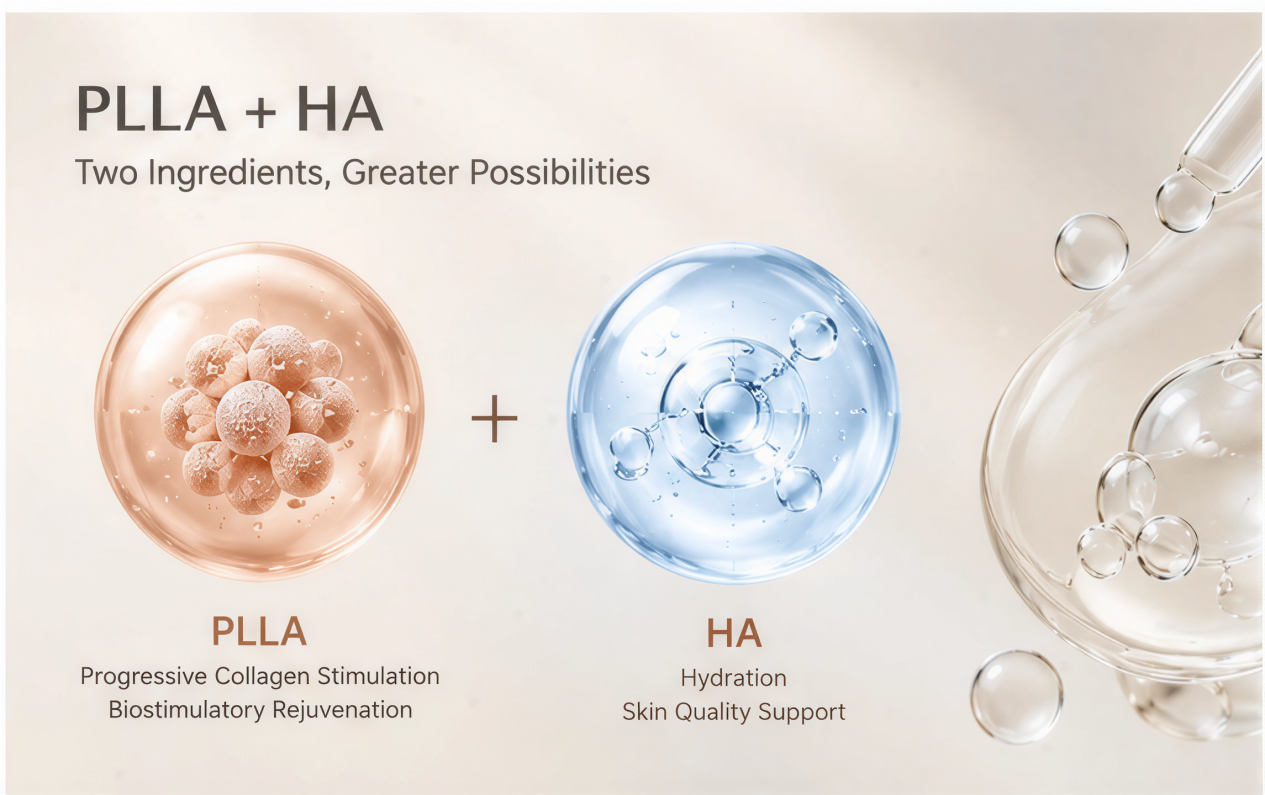
For example, a PLLA + HA Skin Booster combines two different approaches:
PLLA supports progressive collagen stimulation and biostimulatory skin rejuvenation.
HA provides hydration and supports overall skin quality.
This gives the product a different positioning from a conventional HA-only Skin Booster and can add another treatment concept to an aesthetic injectable portfolio.
Particle size is one of the technical specifications worth reviewing when sourcing PLLA.
Manufacturers may use different particle sizes and distributions depending on the formulation and intended application. Buyers can look at:
A small-particle PLLA formulation may be positioned for skin-quality-focused applications and fine-line-oriented treatment concepts, including more delicate areas.
However, particle size should not be considered on its own. Formulation design, manufacturing quality, intended use and supporting evidence all need to be considered together.
A product is easier to build into a business when its role is clear.
A PLLA Skin Booster can be positioned around:
This can also help distributors create a more structured product portfolio. Instead of offering several products with almost identical hydration-focused positioning, a PLLA Skin Booster can introduce a distinct progressive biostimulation concept.
Before placing an order, professional buyers should request complete product specifications, including:
Clear specifications are especially important for distributors, as they provide a reliable basis for product comparison, sales training and communication with clinic customers.
For injectable products, the manufacturer behind the product is just as important as the formulation.
Look at the manufacturer's quality-management system, production capabilities, batch consistency, traceability and technical documentation.
For international distribution, regulatory documents are also important. Different markets have different registration, import and labeling requirements, so having the right documentation available can make the process much more efficient.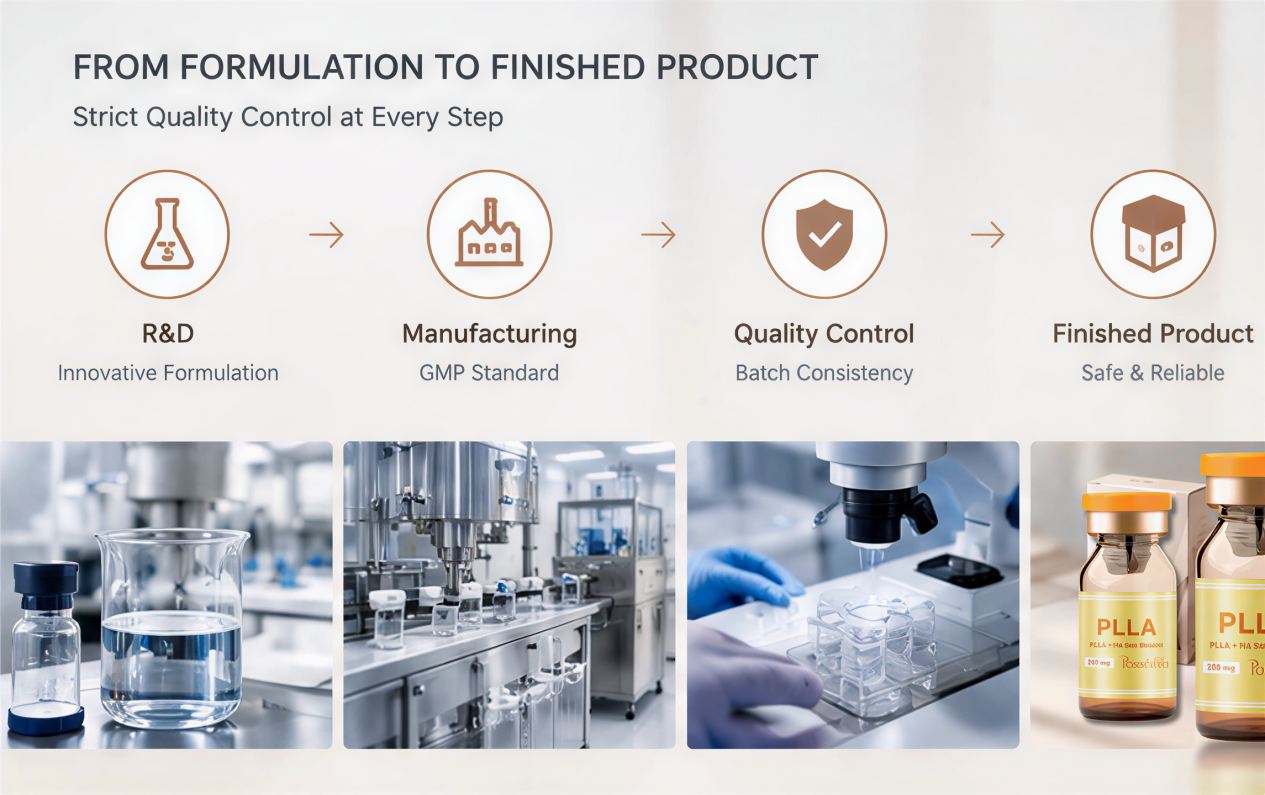
A good supplier needs to support more than the first shipment.
Before choosing a product, consider MOQ, lead time, production capacity, packaging, pricing and repeat-order support.
For distributors, consistency is particularly important. The product specifications should remain stable across repeat batches, while supply should be reliable enough to support continued sales.
Manufacturer support can also become valuable when a business moves toward OEM, ODM or private-label development.
A well-structured injectable portfolio usually gives each product a clear role.
For example:
HA Skin Booster — hydration and skin quality
PDRN + HA Skin Booster — regenerative and skin-repair positioning
PLLA Skin Booster — progressive collagen stimulation and skin rejuvenation
This makes it easier for clinics to build different treatment concepts and for distributors to communicate product differences clearly.
There is no single specification that determines whether a PLLA Skin Booster is suitable for every business. The better approach is to look at the complete picture: formulation, particle characteristics, application, manufacturing quality, documentation and commercial terms.
The goal is not simply to find another PLLA product. It is to find one that has a clear position in your portfolio and can be supported consistently as your business grows.
If you are sourcing PLLA Skin Booster for clinic use, wholesale distribution or private-label development, explore our [PLLA Skin Booster] or contact us to discuss product specifications, MOQ and cooperation opportunities.
Copyright © 2026 DermalFillerX All Rights Reserved. POWERED BY UEESHOP


